

SEO is the process of improving your website so it appears more often (and more prominently) in search results when people look for products, services, or answers you offer. When done well, SEO helps the right people find you at the exact moment they’re searching and turns that visibility into traffic, leads, and sales over time.
What is SEO?
SEO stands for Search Engine Optimization. In simple terms, it’s the work you do to help search engines understand your pages, trust your site, and choose your content as a strong answer for a query.
A helpful way to think about SEO is this: search engines try to recommend the best result for each search. Your job with SEO is to make it easy for search engines to see that your page is relevant, genuinely useful, and credible compared to alternatives.
A simple definition in plain English
SEO is about getting more qualified visitors from organic search. The “free” listings you see in search results that aren’t ads. That doesn’t mean SEO is free to do (it takes time and effort), but it does mean you aren’t paying for each click the way you do with paid advertising.
For a business, SEO is often one of the highest-leverage marketing channels because strong pages can keep bringing in leads long after they’re published.
What SEO is not (quick misconceptions)
SEO isn’t a one-time checklist you complete and forget. Search results change, competitors publish new pages, and customer behavior shifts, so SEO is an ongoing practice.
SEO also isn’t “tricking Google.” If a tactic only works because it manipulates signals rather than improving value, it’s risky. Modern SEO is much closer to building a better website and better content than gaming an algorithm.
What does “optimization” mean in SEO?
“Optimization” can sound like you’re tuning a machine. In SEO, optimization means improving how well your page satisfies the searcher and how clearly that value is communicated to search engines.
If people click your page and quickly leave because it doesn’t help them, you’re not truly optimized. If your page is helpful but search engines can’t understand it or can’t access it, you’re also not optimized.
Optimizing for people first, search engines second
The best SEO strategy is usually straightforward: create pages that are genuinely helpful for a specific audience and make them easy to use. Search engines are trying to reward that.
When you optimize for people, you naturally improve many SEO signals: clearer structure, better readability, more complete answers, and stronger engagement. Then you add the technical and on-page refinements that help search engines interpret the page correctly.
Relevance, quality, and trust as the core idea
Most successful SEO can be traced back to three ideas:
- Relevance: Your page matches what the person is searching for.
- Quality: Your page is a better answer than other results.
- Trust: Your site and brand look credible, consistent, and safe.
Everything from keyword choices to content depth to link building is ultimately supporting one of these three.
How does SEO work?
Search engines follow a predictable process. If you understand the basics, SEO becomes far less mysterious and much easier to prioritize.
Crawling: how search engines discover pages
Search engines use automated programs (often called “crawlers” or “bots”) to discover content across the web. They find pages by following links and reading sitemaps and other signals that indicate what exists on your site.
If important pages aren’t linked well internally, or if technical settings block crawlers, those pages may be discovered slowly, or not at all. That’s one reason site structure and internal linking matter.
Indexing: how search engines store and understand content
After discovery, search engines may store and process a page in their index. Indexing is where search engines interpret what a page is about, how it’s structured, and how it relates to other pages.
If a page is thin, duplicated, confusing, or blocked by technical directives, it may not be indexed the way you expect. A page can exist on your site and still fail to show up in search because indexing didn’t happen (or didn’t happen well).
Ranking: how search engines choose what to show first
When someone searches, the search engine ranks results based on hundreds of factors. The goal is to show the most useful, trustworthy answer for that specific query, in that specific context.
Ranking is where content quality, topical relevance, authority signals, user experience, and technical health all come together. You don’t “rank a website” in general. You rank a specific page for a specific query.
What is SEO marketing?
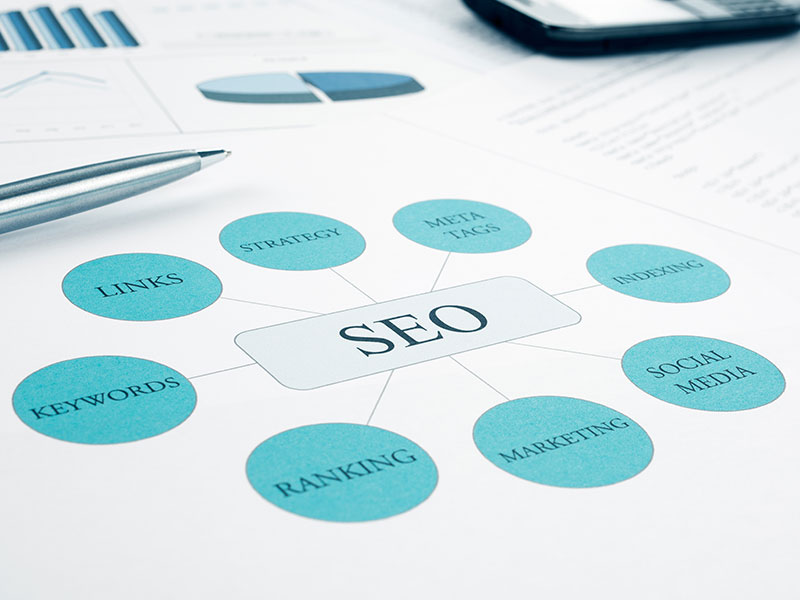
SEO marketing is using SEO as a growth channel within your overall marketing strategy. Instead of relying only on ads or outbound outreach, SEO marketing builds a steady pipeline of organic traffic by publishing content and improving site performance for the searches your customers already make.
For many small and mid-sized businesses, SEO marketing is especially valuable because it compounds: improvements today can keep producing results for months or years.
How SEO fits into a marketing strategy
SEO supports multiple parts of the customer journey. Some pages capture early research searches, while others target high-intent searches that signal someone is ready to buy.
When SEO is integrated with your messaging, sales offers, and conversion paths, it becomes more than “traffic.” It becomes a system that attracts the right audience and guides them toward action.
SEO vs paid search: when each makes sense
Paid search is great for speed and predictability: you can launch campaigns quickly and pay for immediate visibility. SEO is great for compounding value: you invest in assets that can earn traffic over time.
A practical approach for many businesses is to use paid search for fast wins and testing, while building SEO for long-term efficiency and stability. If you need leads this week, paid might be the lever. If you want lower cost per acquisition over the next year, SEO becomes essential.
What SEO success looks like for a business (outcomes, not vanity)
SEO success isn’t just “we rank #1.” Rankings matter, but business outcomes matter more.
Good SEO marketing typically shows up as better-quality inquiries, more qualified calls, increased demo requests, more ecommerce revenue, or a stronger pipeline for your sales team. The right SEO targets searches that attract buyers, not just browsers.
What are the main types of SEO?
SEO is often grouped into three main categories. Understanding them helps you avoid focusing on only one part and wondering why growth stalls.
What is on page SEO?
On-page SEO is everything you do on your website pages to help them rank, especially content quality and how the page communicates its topic.
On-page SEO includes writing clear, helpful content that matches search intent, using descriptive headings, and making sure titles and meta information reflect what the page is about. It also includes internal linking and using images or media that improve understanding rather than cluttering the page.
A simple rule: on-page SEO makes the page a better answer and makes that answer easier for search engines to interpret.
What is off page SEO?
Off-page SEO is the trust and authority your site earns from outside your website. The most well-known part is backlinks (other sites linking to you), but it also includes brand mentions, reviews, and signals that your business is recognized and reputable.
Off-page SEO is often the difference between a good page that ranks “somewhere” and a good page that ranks near the top, especially in competitive industries. You can publish great content, but if no one references it and your brand looks unknown, it can be harder to outrank established competitors.
Technical SEO (the foundation that supports both)
Technical SEO is the infrastructure that helps search engines access, understand, and properly serve your pages. It’s not about writing better content or earning links; it’s about removing friction.
If technical SEO is weak, on-page improvements may not be fully recognized and off-page signals may not translate into rankings as effectively. Strong technical SEO makes everything else work better.
Technical SEO basics you should understand
You don’t need to be a developer to benefit from technical SEO. You just need to know what can block growth and what “good” looks like.
Site speed and performance fundamentals
Fast sites usually convert better and provide a better experience. From an SEO perspective, speed can also reduce bounce and help search engines see your site as higher quality.
Performance isn’t just “load time.” It includes how quickly the page becomes usable, how stable it feels while loading, and whether heavy scripts slow everything down. Even basic fixes, compressing images, reducing bloated plugins, and improving hosting, can move the needle.
Mobile friendliness and accessibility
Most searches happen on mobile devices, so your site needs to be easy to read and navigate on small screens. If your menus are hard to use, text is tiny, or buttons are mis-tapped, you’re losing people even if you rank.
Accessibility improvements often help SEO too: clearer structure, better headings, descriptive alt text where appropriate, and more logical navigation make content easier to understand for both users and systems.
Indexation control: sitemaps, robots, canonical basics
Indexation is where many SEO campaigns quietly fail. You can have great pages that never get properly indexed due to preventable issues.
Sitemaps help search engines discover your important URLs. Robots directives can accidentally block key areas. Canonical tags help indicate which version of a page is the “main” one when duplicates exist. You don’t need to memorize the technical details, but you should know that indexation problems can override everything else.
Structured data and SERP features (what it changes and why)
Structured data is extra formatting that helps search engines interpret your content (like products, reviews, FAQs, events, or organizations). It doesn’t guarantee special displays, but it can increase your eligibility for enhanced results.
The key takeaway is that SERP features can change what “winning” looks like. Sometimes the best SEO outcome is not only ranking, but also earning a result format that attracts more clicks and trust.
How to start SEO as a beginner
SEO is easier when you treat it like a repeatable process rather than a collection of hacks. Here’s a beginner-friendly path that works for most businesses.
Step 1: Choose the right topics and keywords
Start with what your customers ask, what they struggle with, and what they search before buying. Then map those themes to keywords that match real intent.
Avoid chasing only high-volume terms if they don’t fit your offer. A smaller number of highly relevant searches can drive better leads than a large number of unrelated visits.
Step 2: Create helpful pages that deserve to rank
Search engines are looking for pages that satisfy the query. That means your content should be complete, clear, and easy to navigate.
In practice, “helpful” usually means you answer the obvious follow-up questions, include examples, and make the next steps clear. A page can be short and helpful, but it can’t be vague.
Step 3: Improve pages with on-page optimization
Once the content is strong, refine the on-page elements that help both readers and search engines.
Use descriptive headings, keep paragraphs readable, and ensure the page title reflects what the page actually delivers. Add internal links to related pages so visitors (and crawlers) can find deeper information easily.
Step 4: Build credibility with off-page efforts
Off-page SEO is often built through relationships and reputation. Useful content can earn links, but you can also proactively promote your best resources.
Think about industry partnerships, digital PR opportunities, supplier and association listings, relevant directories (where appropriate), and content that others naturally cite. The goal is to earn trust signals in ways that make sense for your business.
Step 5: Fix technical issues that block growth
Technical issues can prevent discovery, indexing, or good user experience. Common blockers include slow pages, messy redirects, duplicate content, and pages that aren’t accessible to crawlers.
If you’re unsure where to start, focus on the basics: ensure key pages are indexable, your site works well on mobile, and performance is reasonable. Then refine from there.
How to measure SEO results
SEO should be measured the way you measure other marketing: by impact on outcomes.
The metrics that matter for SMBs (traffic quality, leads, sales)
For most businesses, the most meaningful metrics are organic leads, organic revenue, demo requests, phone calls, form submissions, and other conversion actions that match your goals.
Traffic can be useful context, but traffic alone doesn’t pay bills. Focus on whether SEO is bringing the right people, not just more people.
Rankings vs conversions: how to interpret movement
Rankings are a directional signal. They can tell you if your visibility is improving, but they don’t tell you whether you’re attracting qualified buyers.
Sometimes a page ranks lower but converts better because it matches intent more precisely. Sometimes rankings improve but conversions don’t because the page is informational and the next step is unclear. Measuring both helps you decide what to optimize next.
Simple reporting cadence (weekly vs monthly)
Weekly checks are good for catching issues early and tracking ongoing work. Monthly reporting is better for judging meaningful trends, since SEO often moves in waves rather than straight lines.
A practical rhythm is: monitor weekly for problems, review monthly for performance patterns, and do deeper quarterly analysis for strategic shifts.
Common SEO mistakes to avoid
Many SEO struggles come from predictable missteps rather than a lack of effort.
Chasing high-volume keywords with no intent match
If a keyword doesn’t match what you sell or what your customer needs, ranking for it won’t help. It may even hurt by attracting unqualified traffic that leaves quickly.
Choose keywords based on fit and business value first, then consider search volume as a secondary factor.
Publishing thin content or duplicating pages
Thin pages that repeat what’s already on your site (or what everyone else has published) don’t stand out. Duplicate pages can also confuse search engines about which version to rank.
Aim for fewer, stronger pages rather than many weak ones. Consolidation and improvement often outperform constant publishing.
Ignoring technical blockers and internal linking
You can write excellent content and still struggle if search engines can’t properly access or interpret it. Internal linking is also a common blind spot; it helps distribute authority and guide both users and crawlers.
If important pages are buried, isolated, or blocked, growth becomes much harder than it needs to be.
When to DIY vs hire help
SEO can be done in-house, outsourced, or hybrid. The best choice depends on your resources, timeline, and competitiveness of your market.
What most businesses can handle in-house
Many businesses can handle foundational SEO internally: defining customer questions, writing subject-matter content, improving service pages, and building basic internal links.
If you have someone who can consistently publish helpful content and coordinate with a developer for technical fixes, you can make strong progress without a large budget.
When an agency or white-label partner makes sense
If your market is competitive, your site has technical complexity, or you need faster progress with fewer internal hours, professional help can be the most efficient route.
For agencies, a white-label SEO partner can help scale delivery, technical audits, content planning, on-page execution, and reporting, without adding heavy internal headcount. The key is choosing a partner that focuses on business outcomes, not vanity metrics.
What SEO is and what to do next?
SEO is the practice of earning organic visibility by making your site more relevant, more helpful, and more trustworthy for the searches that matter to your customers. If you want to start, focus on getting the basics right: target the right keywords, publish genuinely useful pages, strengthen on-page clarity, build off-page credibility, and keep technical issues from holding you back.
FAQ
What is SEO in simple terms?
SEO improves your website so it appears in search results for relevant queries. It focuses on helpful content, clear page structure, and building trust signals that search engines recognize.
What is the difference between on page SEO and off page SEO?
On-page SEO improves elements on your website like content, titles, headings, and internal links. Off-page SEO builds authority through links, mentions, reviews, and brand credibility.
How long does SEO take to work?
SEO results vary by competition and site quality. Some gains appear in weeks, but meaningful growth typically takes 3 to 6 months, sometimes longer for competitive markets.